
Table of Contents
- The Research on Bilingualism and Speech Delays
- How Many Words Should a 18 Month Old Say?
- Signs of Speech Delay in Toddlers: What to Watch For
- The Silent Period: When Bilingual Children Don’t Speak
- Code-Switching vs. Language Delay: Understanding the Difference
- Speech Therapy for Bilingual Children: What Parents Should Know
- When to Seek Professional Guidance
- Frequently Asked Questions
Last Updated: October 7, 2026
The Research on Bilingualism and Speech Delays
No, does bilingualism cause speech delays? The longer answer is that bilingual children sometimes look delayed on the wrong measuring stick, and that gap between appearance and reality is where most parental worry lives. (Source: American Speech-Language-Hearing Association (ASHA) has stated)
At Project Speech, we evaluate bilingual kids every week in our Boynton Beach clinic, and the pattern is remarkably consistent: a child who seems “behind” in English is often right on track when you count what they know across both languages.
Below, we break down what the evidence shows, how to spot a real problem, and when to bring in a professional.
What Studies Actually Show
Bilingual children reach language milestones on the same timeline as monolingual children. The key difference is distribution, not delay.
A child learning Spanish and English may know 30 words in Spanish and 20 in English. A monolingual peer might know 50 in one language. Same total vocabulary size, different spread.
The American Speech-Language-Hearing Association has stated for years that bilingualism itself is not a cause of language disorder. A child with a genuine delay has one in both languages, not just one.
Why the Evidence Is So Consistent
The research base here is unusually strong for a developmental question, and it comes in three flavors:
- Longitudinal studies that follow the same children from infancy through school age. These show that bilingual and monolingual children hit one-word, two-word, and sentence milestones on essentially the same schedule, even when the bilingual children are dividing their input between two languages.
- Total-vocabulary studies look at all the words a child knows across both languages, rather than looking at just one language at a time. When both languages are considered together, bilingual children often know just as many words as monolingual children—and in some studies, even more.
- Comparison studies of bilingual children with and without language impairment. These are the most clinically useful. They show that a child with a true developmental language disorder struggles in both languages, while a typically developing bilingual child may lag in one language only because that language gets less input.
That third finding is the one parents should hold onto. It is the mechanism behind the whole myth: a child who hears Spanish at home and English at daycare is simply getting fewer English hours than a monolingual peer. Fewer hours means slower English vocabulary growth. It does not mean the child’s language-learning system is broken.
The Mechanism: Input, Not Confusion
Language acquisition is dose-dependent. Children learn the words they hear, in the language they hear them. A toddler who hears Haitian Creole all weekend and English all week is not confused; they are running two parallel learning curves, and the curve with more input climbs faster.
This is why a bilingual 2-year-old might have 40 words in Spanish and 15 in English. The Spanish number looks fine. The English number looks low against a monolingual norm. Add them together and the child is right where they should be.
Why the Myth Persists
Several forces keep this myth alive. Pediatricians and daycare staff often assess in English only, which penalizes children from Spanish-speaking or Haitian Creole-speaking homes. Well-meaning relatives warn that “two languages will confuse him.” And the wait-and-see approach feels safer than acting, so families delay evaluation while the window for early intervention narrows.
Here is the part most people get wrong: the real question is not does bilingualism cause speech delays. The risk is missing a real delay because everyone assumed the second language was the problem.
How Many Words Should a 18 Month Old Say?
A typical 18-month-old uses roughly 50 words and starts combining two words into short phrases like “more milk” or “daddy go.” That milestone applies to bilingual children too, but you have to count both languages together.
Milestones for Monolingual vs. Bilingual Children
The developmental milestones are the same. The measurement is different.
|
Age |
Monolingual Expectation |
Bilingual Expectation |
|---|---|---|
|
18 months |
~50 words words |
~50 words across both languages |
|
24 months |
100-200 words, 2-word phrases |
100-200 words combined, 2-word phrases |
|
30 months |
200+ words, short sentences |
200+ words combined, short sentences |
|
36 months |
500+ words, understood by strangers |
500+ words combined, understood by strangers |
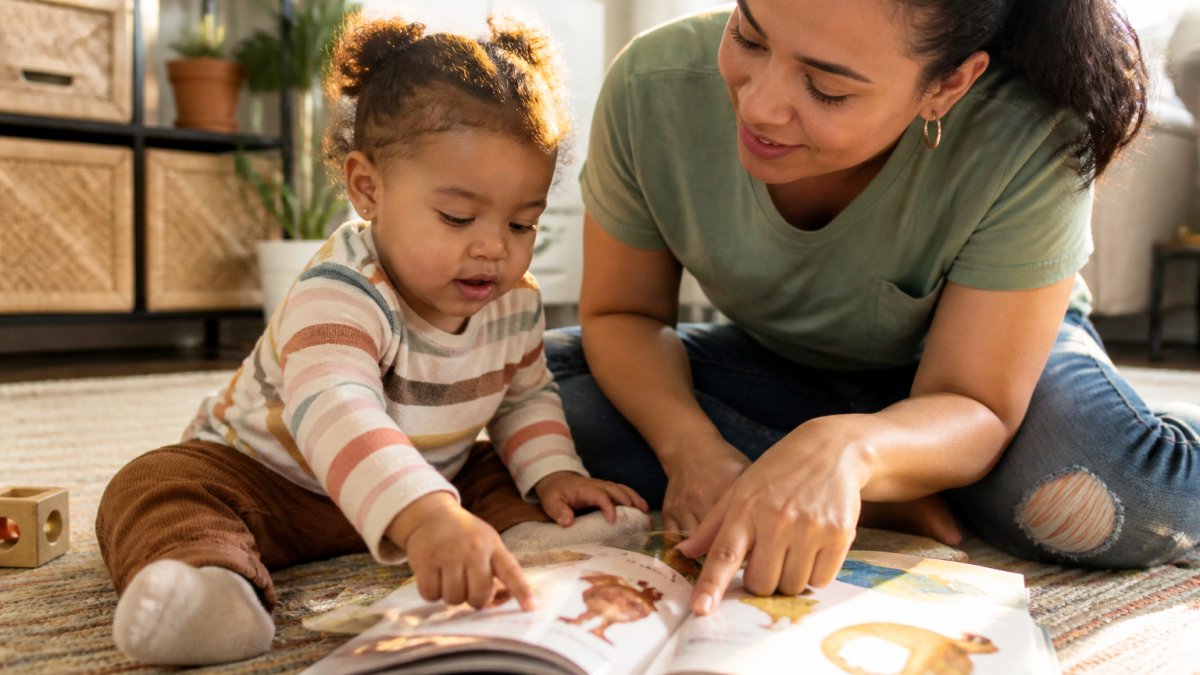
If your child says “agua” for water and “milk” for milk, that is two words, not one repeated concept. Count them both.
What Counts as a Word?
This is where most parents undercount, and it is the single biggest reason bilingual children get mislabeled. A word counts if your child uses it consistently to mean the same thing, even if it is not perfectly pronounced. “Ba” for bottle counts. “Mwen” for “I” counts.
What does not count: a sound your child makes once and never repeats, or a word they only echo back without using it to communicate.
Why the Number Varies So Much
Vocabulary size at 24 months is not a fixed target.
A child who hears Spanish eight hours a day and English two hours a day will have a larger Spanish vocabulary. That is not a delay. It is arithmetic.
This is why the “dominant vs. minority language” distinction matters. Most bilingual children have one stronger language, usually the one spoken at home.
How Clinicians Actually Count
A speech-language pathologist does not just ask “how many words?” They use a combination of tools:
- Parent report inventories, which ask you to check off words your child says from a long list. These are more accurate than free recall because parents forget words their child says only occasionally.
- Language samples, where the clinician records your child playing and talking, then counts different words and sentence types in each language.
- Bilingual assessment protocols, which compare your child’s skills to other bilingual children, not to monolingual norms.
That last point is the gap most parents never hear about. A standardized test normed on monolingual English speakers will almost always score a bilingual child too low. A clinician who understands this will use bilingual norms, parent report in both languages, and often a bilingual examiner. If your child is being tested in English only, ask how the results account for the Spanish or Haitian Creole they also speak.
When tracking vocabulary, keep a running list on your phone for one week. Parents consistently underestimate how many words a toddler actually uses because so many are said once and forgotten. Count words in both languages on the same list, and note which language each word is in.
Signs of Speech Delay in Toddlers: What to Watch For
Real speech delays show up the same way in bilingual and monolingual children. The difference is that bilingual kids show the signs in both languages, not just one.
Watch for these patterns:
- No babbling by 12 months
- No words by 15 months
- Fewer than 50 words or no two-word combinations by 18 months
- Difficulty understanding simple directions in either language
- Limited eye contact, pointing, or gestures
- Loss of words or skills the child previously had
- Frustration or meltdowns when trying to communicate
Red Flags That Warrant Evaluation
Some signs point more clearly toward a genuine communication disorder than a temporary lag. These include trouble with speech sound production past age 3, persistent difficulty with receptive language (understanding), and a family history of language or learning disorders.
If your child speaks only one of their two languages and shows no progress in the other after months of exposure, that pattern deserves a closer look.
Do not accept “he’ll catch up” as a plan. If a child is not meeting milestones in either language, the wait-and-see approach can cost months of valuable early intervention time.
The Silent Period: When Bilingual Children Don’t Speak
The silent period is a normal stage in second-language acquisition when a child understands more than they produce. It is not a delay. It is a phase.
A child newly exposed to English at daycare or preschool may go weeks speaking very little in English while continuing to talk normally at home in Spanish or Haitian Creole.
The silent period typically lasts a few weeks to several months. What matters is whether the child is still communicating in their stronger language.
Code-Switching vs. Language Delay: Understanding the Difference
Code-switching is the practice of mixing two languages within a conversation or even a single sentence.
A child might say “Quiero el blue one” or “Mwen vle the red ball.” That mixing reflects normal language processing. Bilingual adults do it too.
Language delay looks different.
Language dominance also plays a role. Most bilingual children have a stronger language, often the one spoken at home. That is normal.
Speech Therapy for Bilingual Children: What Parents Should Know
Speech therapy for bilingual children works best when it supports both languages rather than replacing one. The goal is never to drop Spanish or Haitian Creole in favor of English.
Evidence-based practice for bilingual kids means the therapist understands typical bilingual development and can distinguish difference from disorder. That distinction is the whole ballgame. A therapist who only assesses in English will over-identify problems. A therapist who understands bilingual acquisition will not.
Assessment Tools and Clinical Approaches
Proper assessment of a bilingual child uses tools designed for bilingual populations, includes parent report of both languages, and often involves a bilingual speech-language pathologist. Standardized tests normed on monolingual English speakers are not reliable on their own for bilingual children.
At Project Speech, our bilingual speech-language pathologists evaluate children from 18 months through high school, and we take into consideration both languages before drawing any conclusions. That is not a nice-to-have. It is the difference between an accurate diagnosis and a wrong one.
When to Seek Professional Guidance
Bring in a professional if your child is not meeting milestones in either language, if you see red flags like loss of skills, or if you simply are not sure.
Early intervention matters because the brain’s language-learning window is widest in the toddler and preschool years. The earlier a real delay is identified, the more effective support tends to be.
Project Speech offers specialized pediatric speech therapy in a boutique clinic setting, with bilingual support for children from 18 months through high school.
Frequently Asked Questions
What is the most common cause of speech delay?
Speech delays can stem from several factors, including hearing loss, developmental conditions like autism spectrum disorder, genetic syndromes, or oral-motor difficulties. In bilingual children, a delay is not caused by exposure to two languages. If a child is not meeting milestones in both languages combined, an evaluation by a speech-language pathologist can identify the underlying cause. Early intervention leads to better outcomes regardless of the reason.
Do bilingual children reach speech milestones at the same time as monolingual children?
Research shows that bilingual children reach major speech and language milestones on a similar timeline to monolingual peers. A bilingual toddler may have a smaller vocabulary in each individual language, but their total vocabulary across both languages is often comparable. If you speak Spanish and English at home, your child’s combined word count in both languages is what matters most for tracking development.
How can I tell if my child has a speech delay or is just processing two languages?
Look at your child’s total communication across all languages. If they use gestures, follow directions, and add new words in either language over time, they are likely developing typically. Signs of speech delay in toddlers include no words by 15 months, fewer than 50 words by 18 months, or no two-word phrases by 24 months. A speech-language pathologist can assess both languages to determine whether a genuine delay exists.
Does learning Spanish and English simultaneously confuse a toddler?
No. Children can learn two languages at once without confusion. Mixing words from both languages, called code-switching, is a normal part of bilingual development and not a sign of confusion or delay. Toddlers naturally sort out which language to use with different people over time. Consistent exposure to both Spanish and English, whether at home or in the community, supports healthy language acquisition.